Materials
What it does
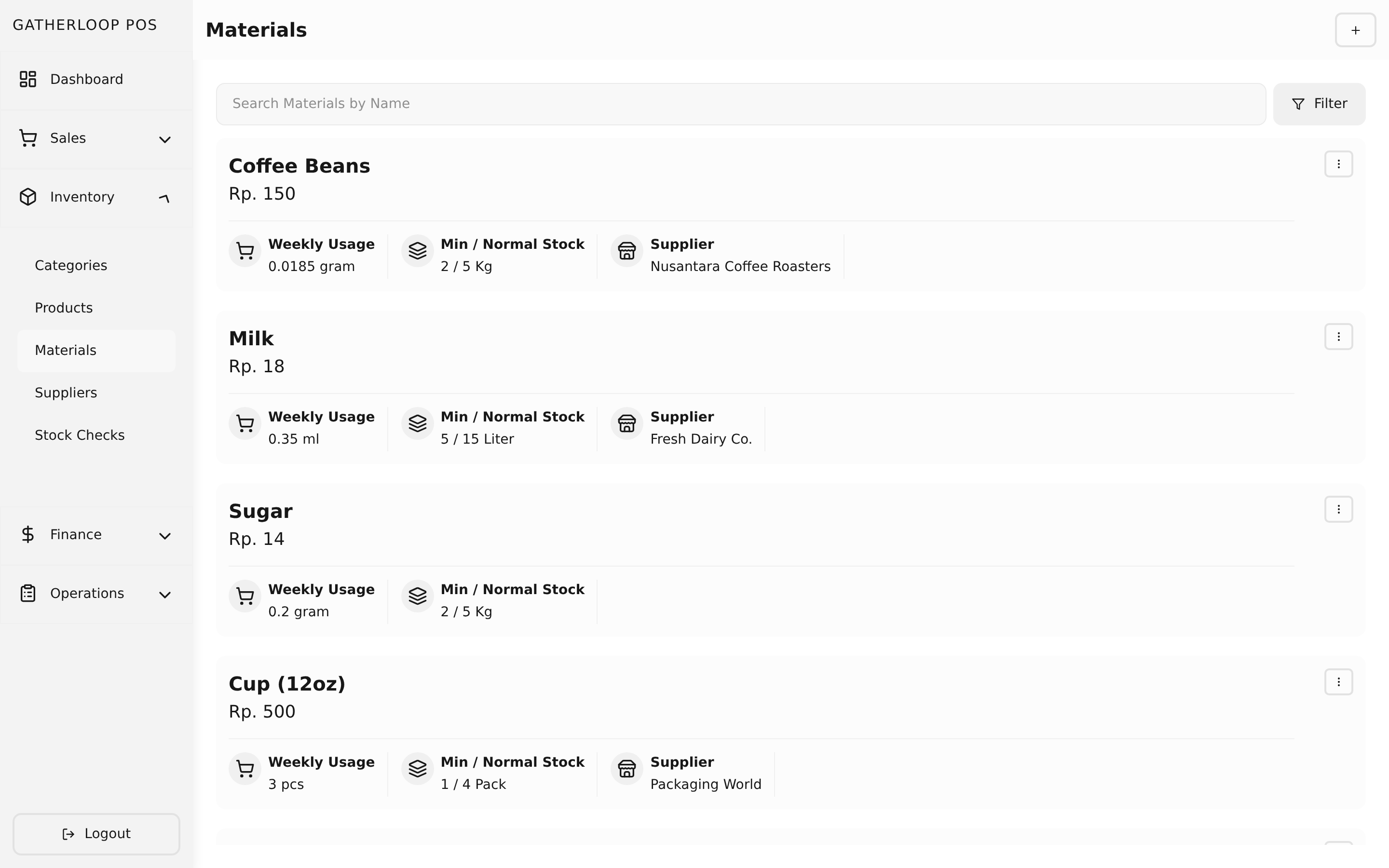
A material is a raw ingredient or supply the cafe buys and uses — milk, coffee beans, cups, board-game pieces. Each material records a cost per unit in its own costing unit (e.g. price per gram), which is exactly the unit a variant's bill of materials uses when it says how much of that material one sale consumes.
Materials also carry the details needed to keep them stocked: a separate purchase unit and purchase unit size (buying flows in kilograms; the bill of materials costs in grams — the material record converts between the two), minimum and normal stock levels, a computed weekly usage figure, whether the material needs to appear on stock-check forms, and a list of suppliers it can be sourced from, each with its own way of being ordered (online link, offline pickup, or phone-in delivery).
Why it matters
A material is the single fact the rest of the catalog's money math is built on. Its cost per unit, multiplied by the amount in a variant's bill of materials, is the entire food-cost calculation described in Product Variants — there's no separate "ingredient pricing" system to keep in sync. The same record then turns around and drives the inventory side of the business: minimum/normal stock levels and weekly usage feed Stock Checks and Purchase Lists, and the supplier list is exactly where a purchase list sends someone to reorder. One material record, entered once, powers both "is this menu item priced correctly?" and "are we about to run out?"
Screenshot
Key capabilities
- Cost per unit — the price of one costing unit (e.g. one gram), used directly by every variant's bill of materials that includes this material.
- Purchase conversion — a separate purchase unit and purchase-unit-size (e.g. "1 Kg = 1000 g") so procurement can be planned in the units suppliers actually sell in, while bills of materials stay in fine-grained costing units.
- Stock thresholds — minimum and normal stock levels, expressed in purchase units, for reorder planning.
- Computed weekly usage — a read-only figure derived from actual sales: total material consumed by transactions over the trailing two weeks, averaged to a per-week number, so restocking decisions are based on real demand rather than guesswork.
- Stock-check flag — a material can be marked as required (or not) on stock-check forms, keeping counts focused on what actually needs regular checking.
- Multiple suppliers per material — each linked supplier has its own purchase type:
online(with an order URL),offline(in-person, no URL needed), ordelivery(phone-in, requires the supplier to have a phone number on file).
For engineers
- Screens/components:
libs/ui/src/presentation/screens/Material{List,Create,Update}Screen.tsx,libs/ui/src/presentation/components/materials/MaterialFormView.tsx - Entity:
libs/ui/src/domain/entities/Material.ts - Backend:
apps/api/domain/material_entity.go,material_usecase.go; weekly usage query inapps/api/data/mysql/material_repo.go(GetMaterialsWeeklyUsage) - Related:
docs/prd-material-stock-check-flag.md; Product Variants for the bill-of-materials side, Suppliers and Stock Checks for the inventory side.